phantom footprint
closing the climate feedback loop
Challenge: Making climate consequences tangible for college students.
Solution: An IoT-enhanced, physical board game.
4 Months (Thesis Project)
chapter i
The Problem
Overwhelmed User.
Climate education is inaccessible, abstract, and doesn't connect daily actions to global outcomes. Users feel disconnected from the consequences of their choices.
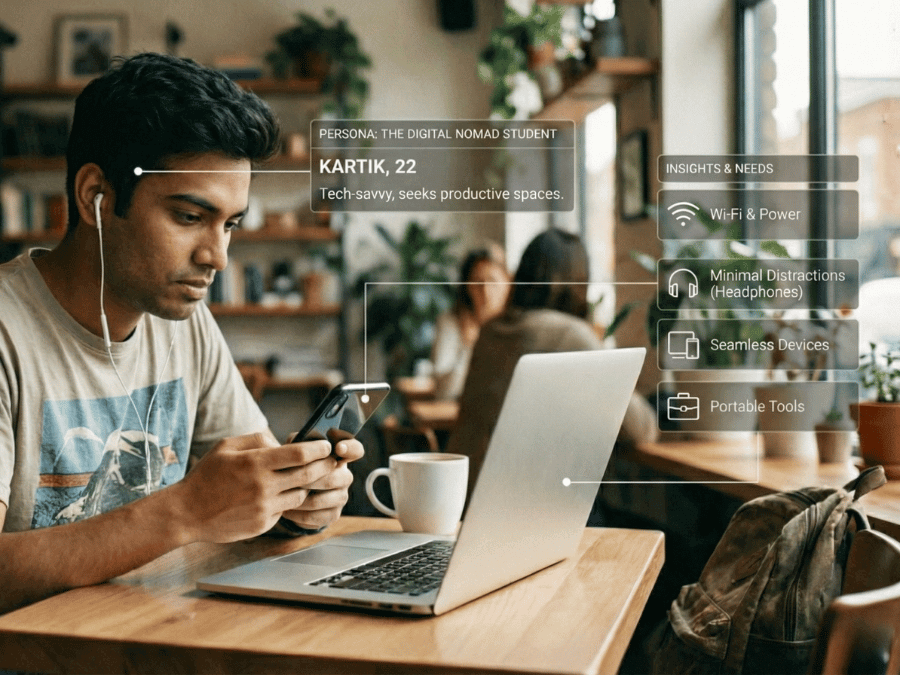
The College Student Archetype: Wanting Impact, Lacking Tools.
They are digitally engaged but feel passive about climate change.
- Passive learner vs. socially active advocate
- Need immediate, tangible feedback
- Desire for meaningful action
The Opportunity: Interactivity > Simulation.
Existing tools (calculators, digital apps) lack the hands-on, immediate, emotional connection required for behavioral change.
chapter ii
Technologies
From Paper Prototype to Tangible Mechanic.
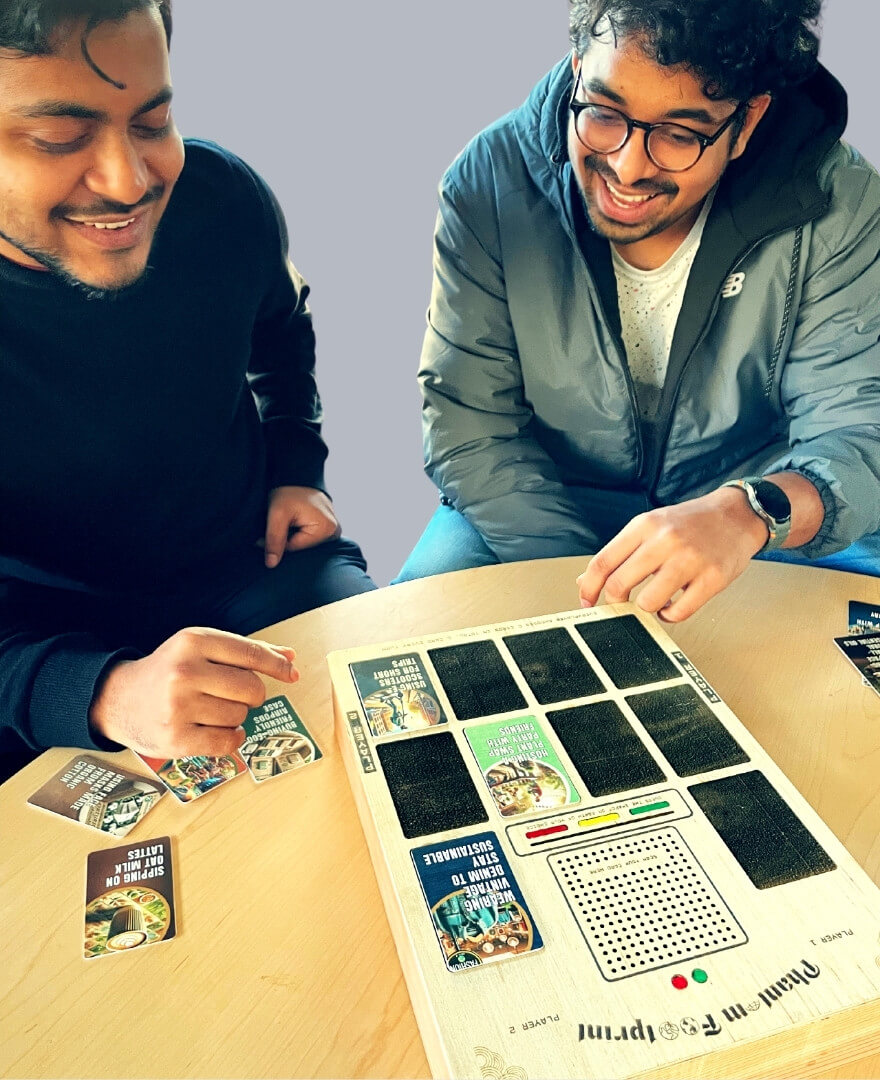
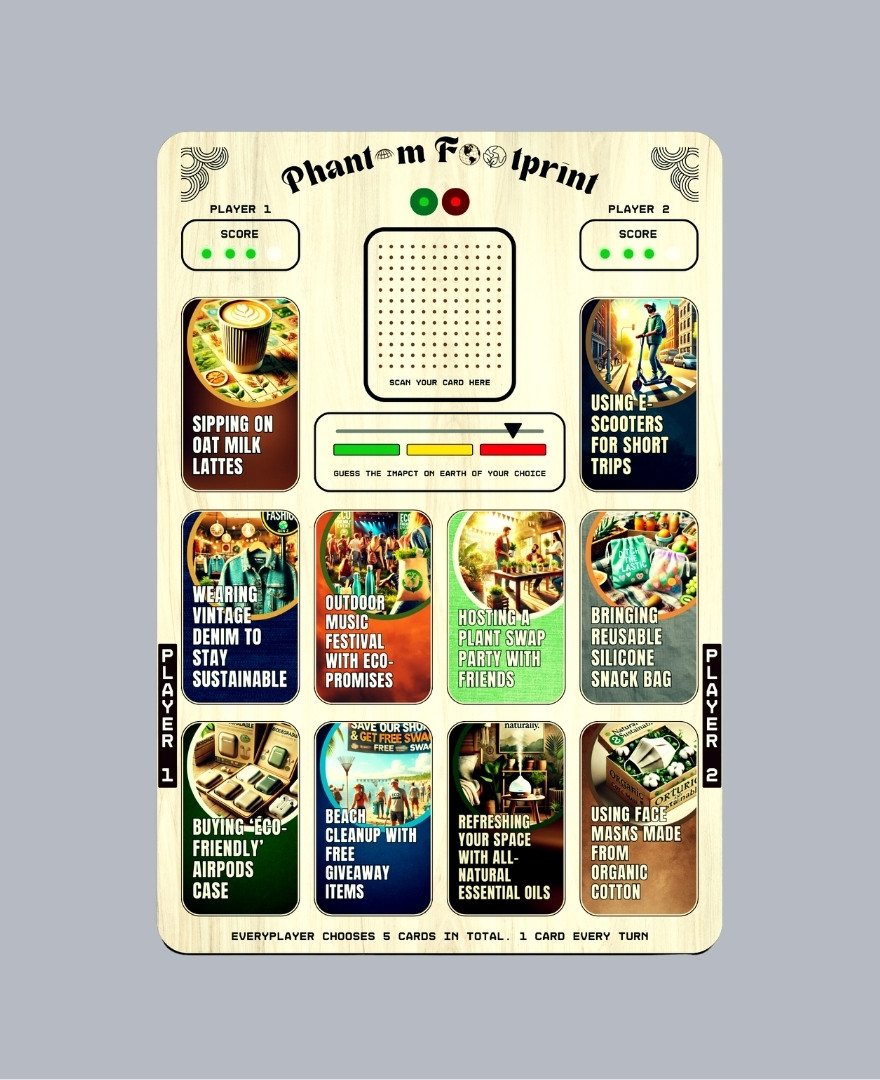
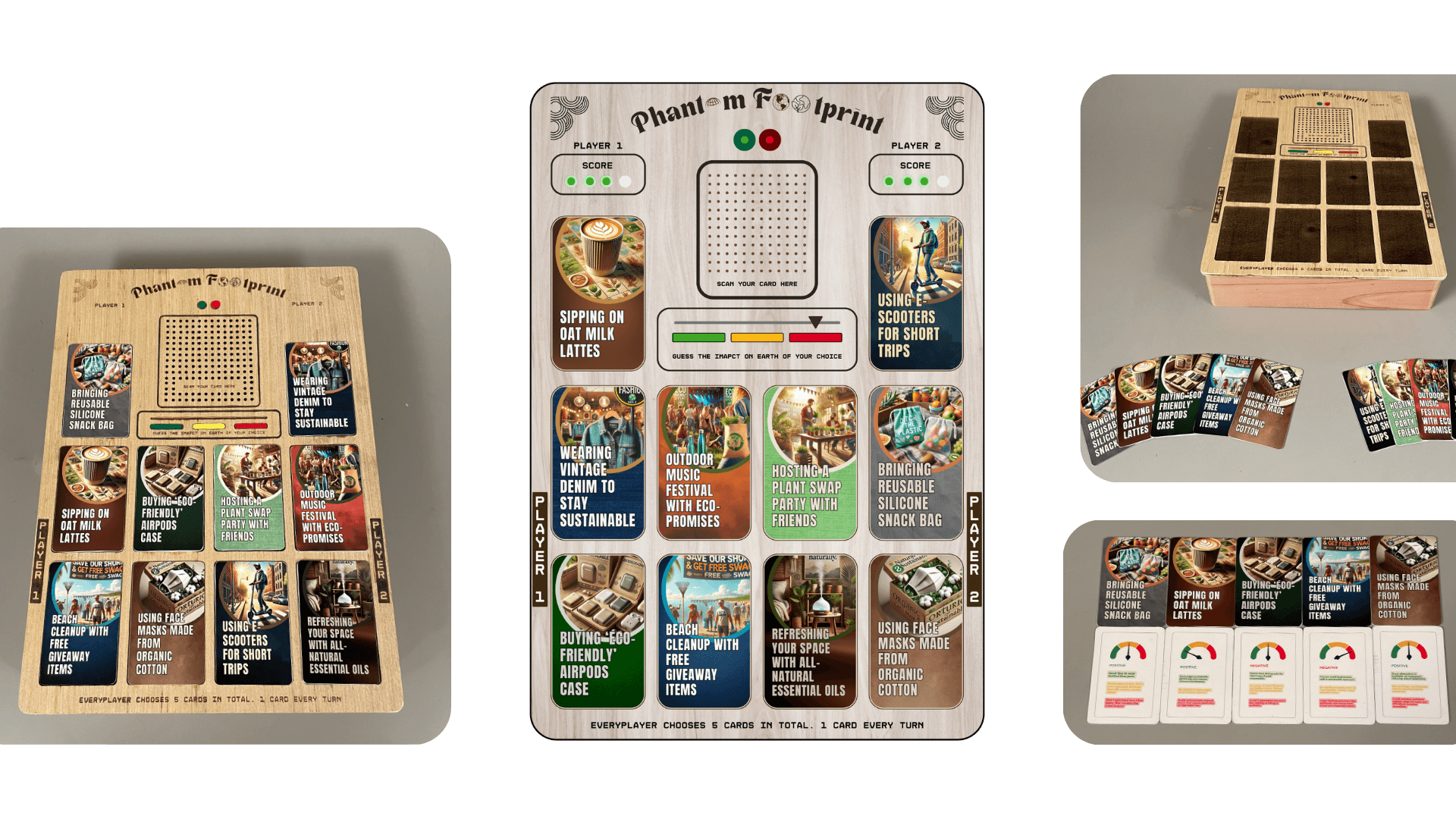
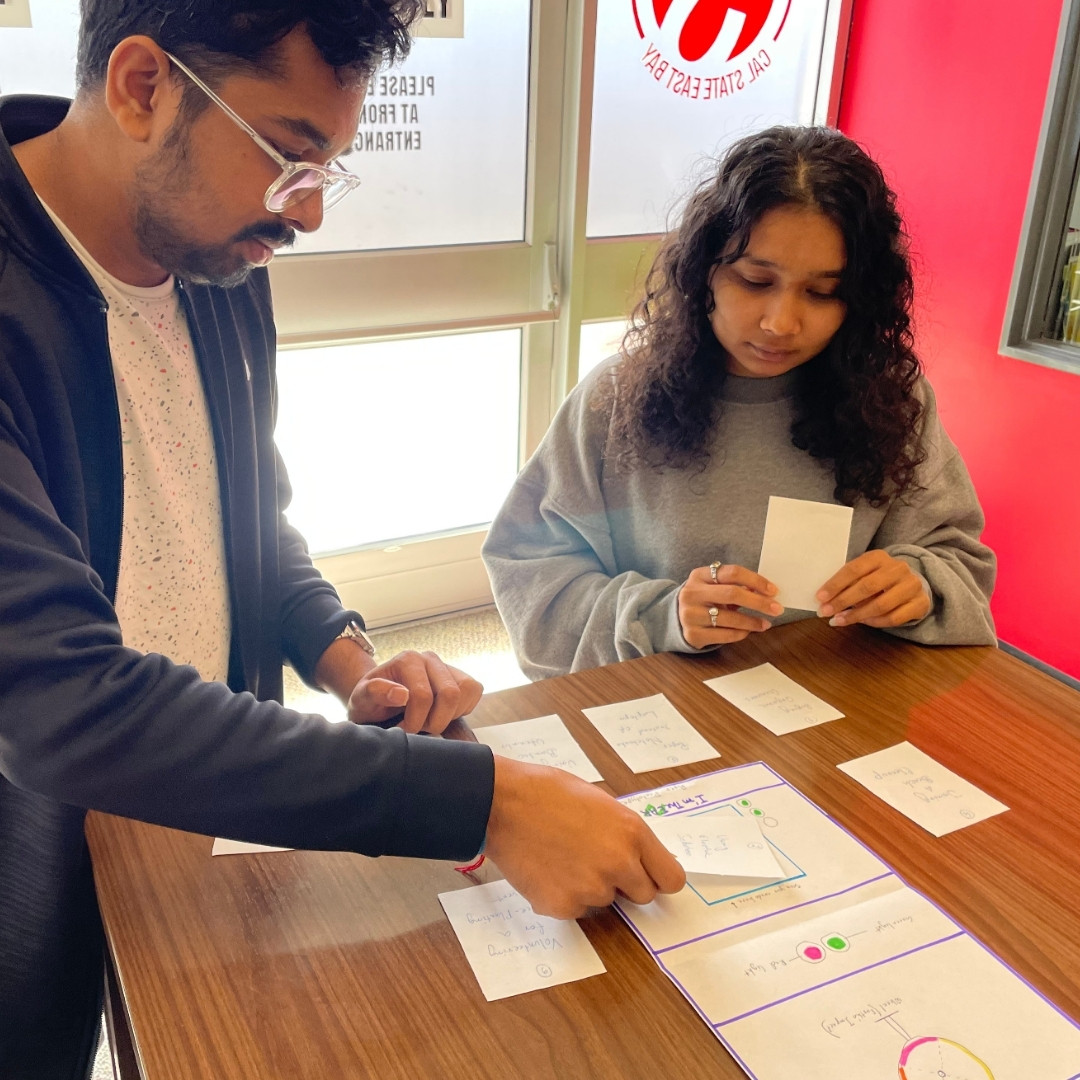
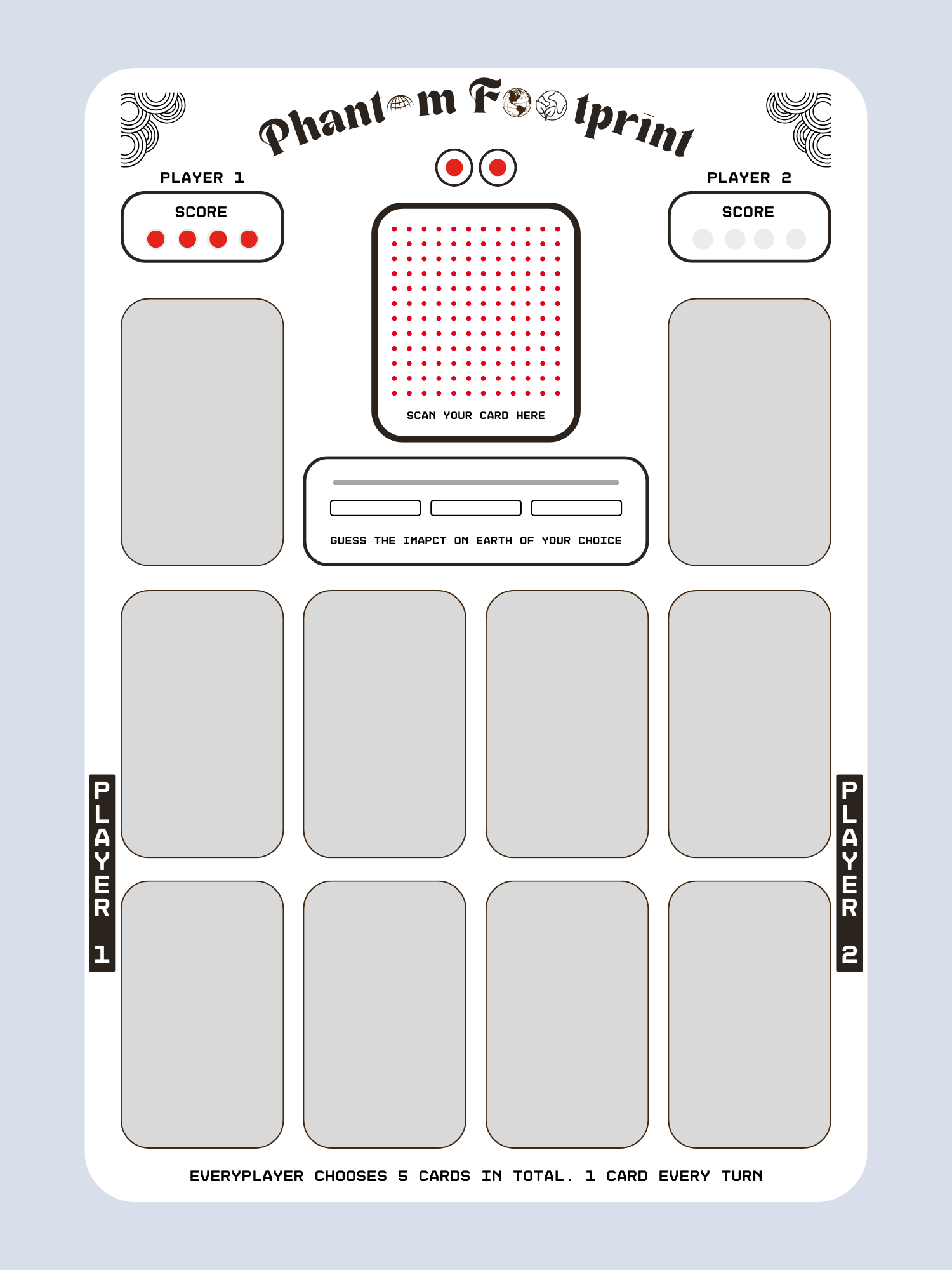
Rapid prototyping phase using Double Diamond methodology. The game mechanic is built around choice cards representing daily actions with environmental consequences.
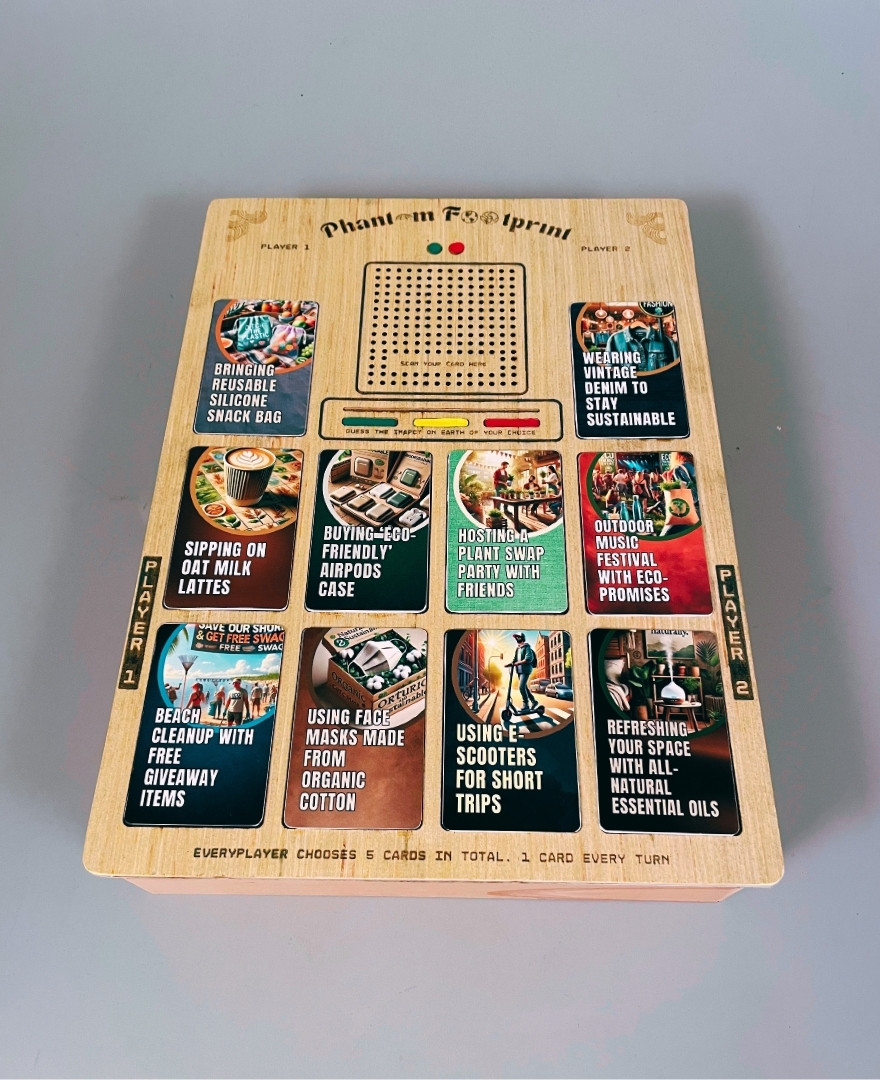
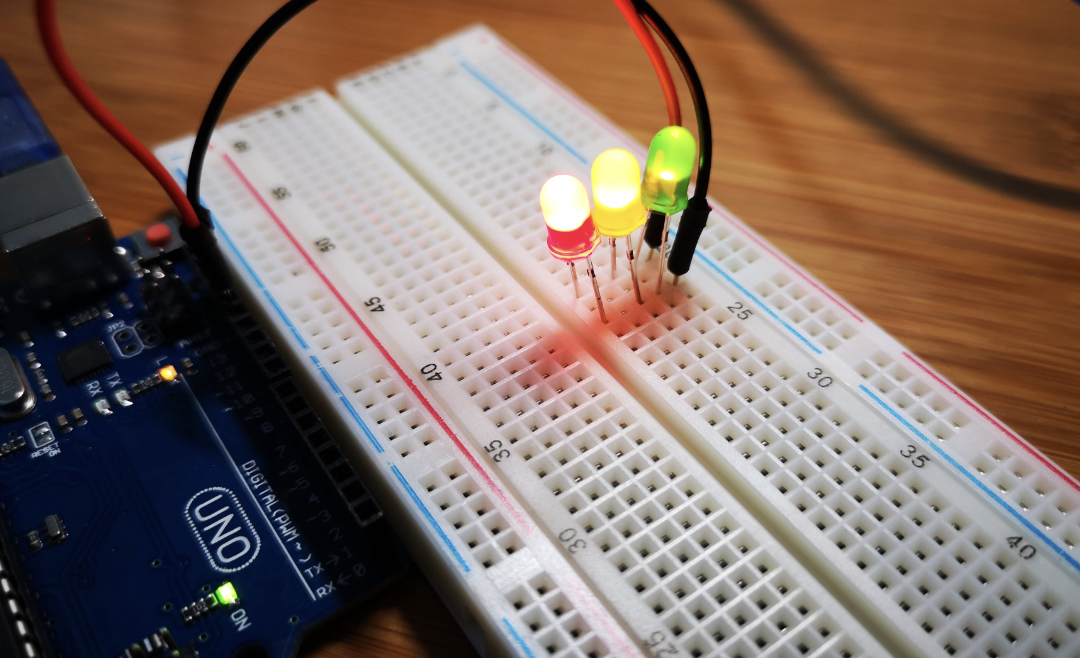
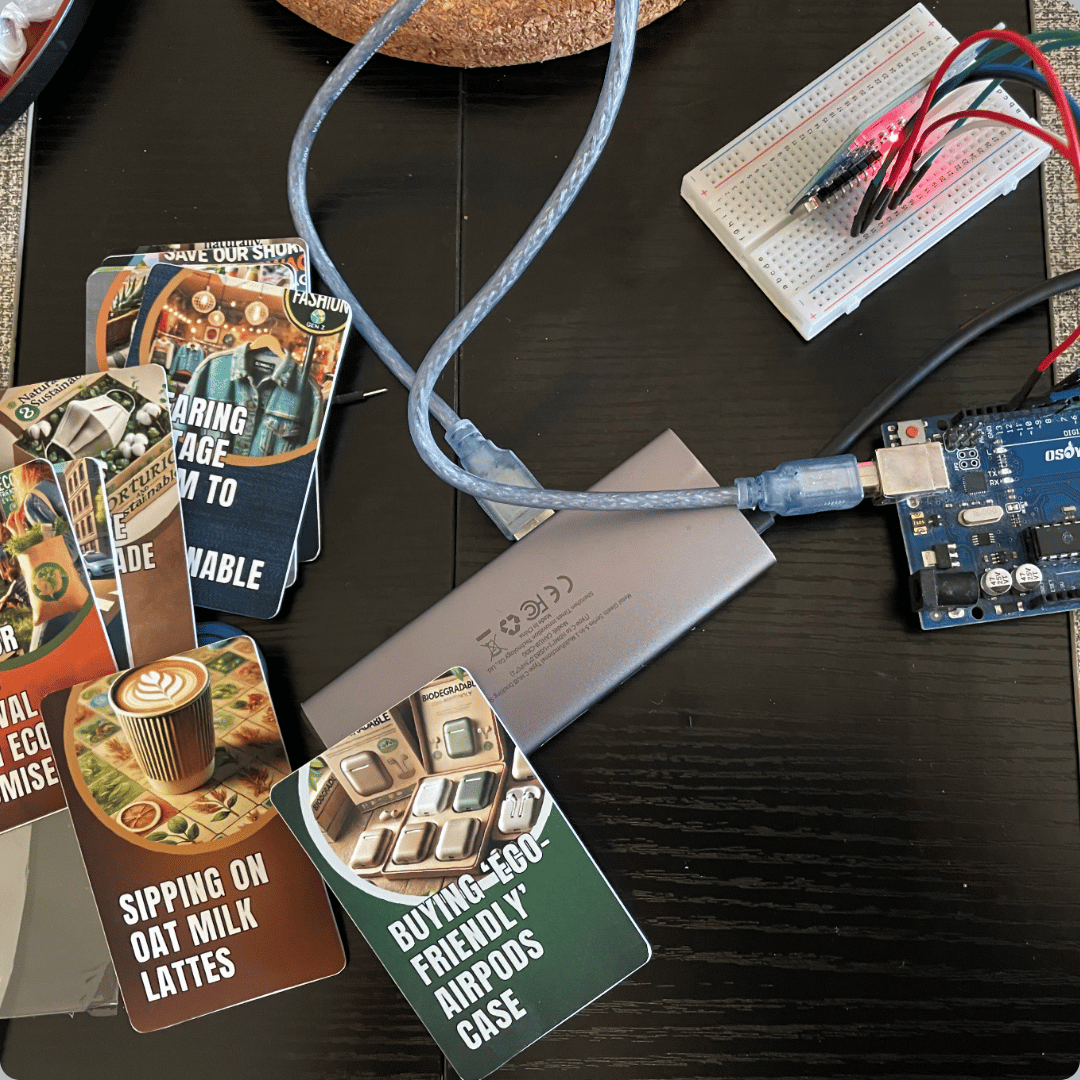
Mapping Action to Immediate Feedback (Arduino + RFID).
The core innovation: using RFID to scan a choice card and trigger an LED status light (red/yellow/green) via Arduino. This closes the feedback loop instantly, connecting user actions to environmental consequences.
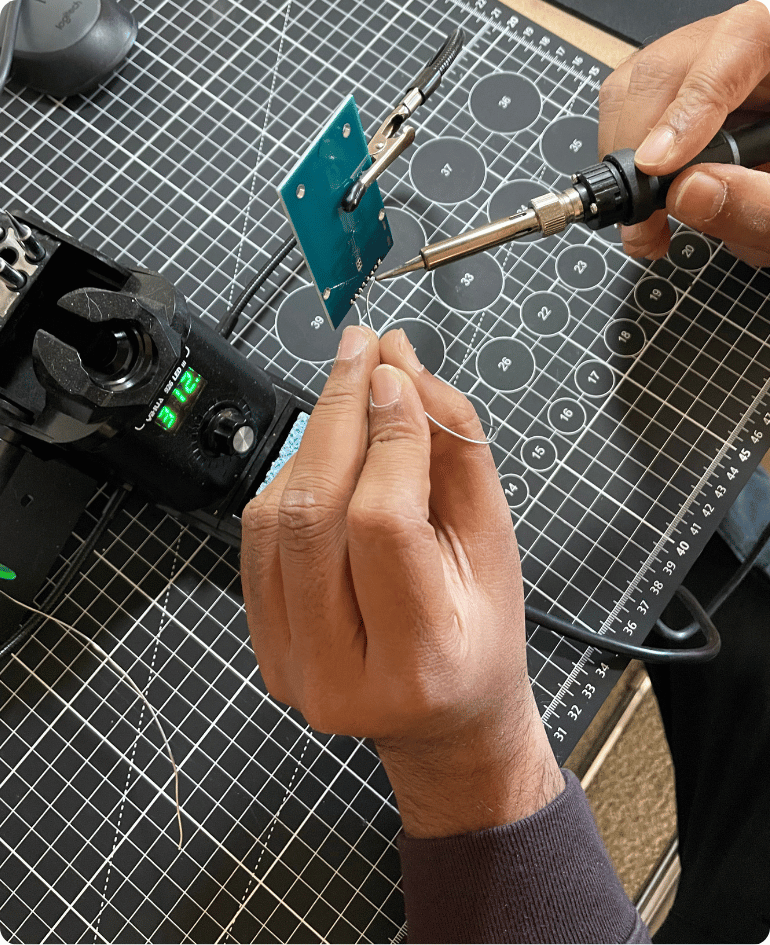
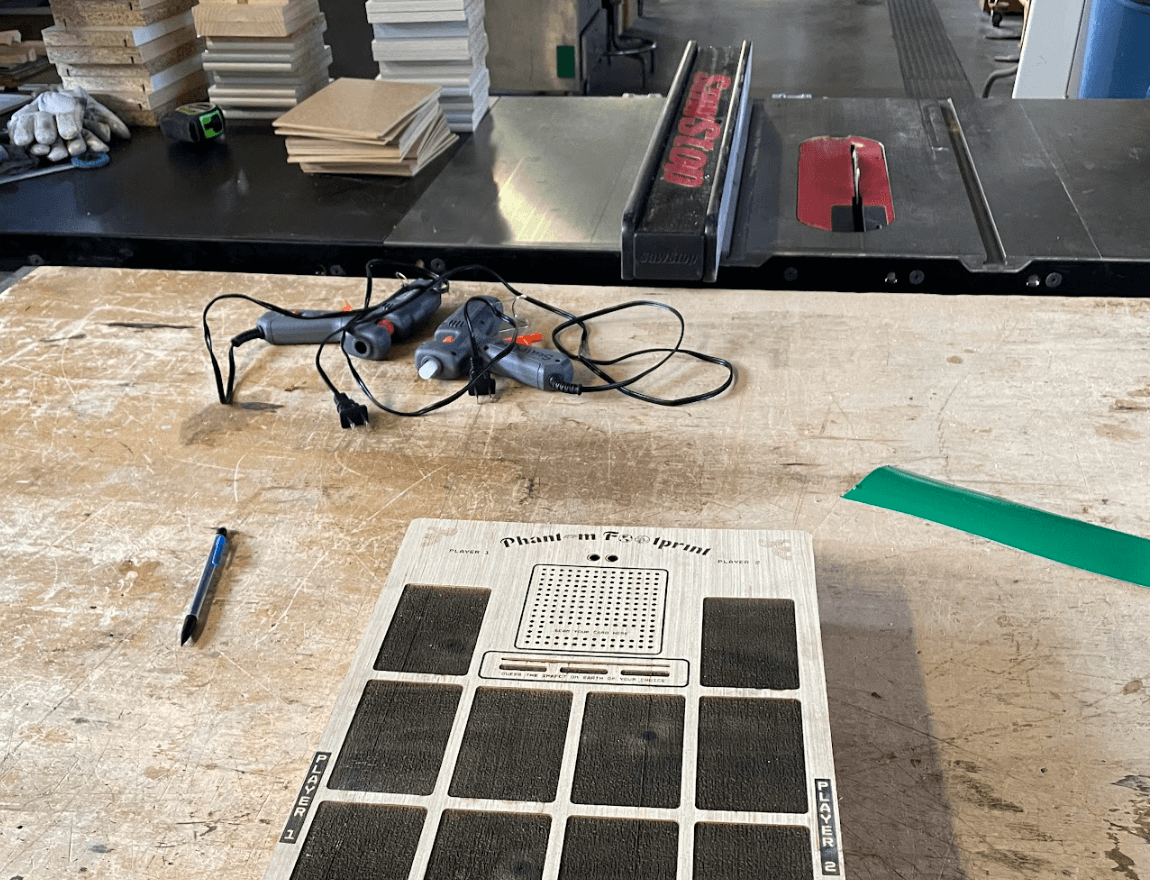
From Wiring to Final Assembly.
Showcasing the hands-on nature of full-stack design thinking: digital UX combined with physical product development. Soldering, wiring, and final assembly of the board and sensor mechanism.
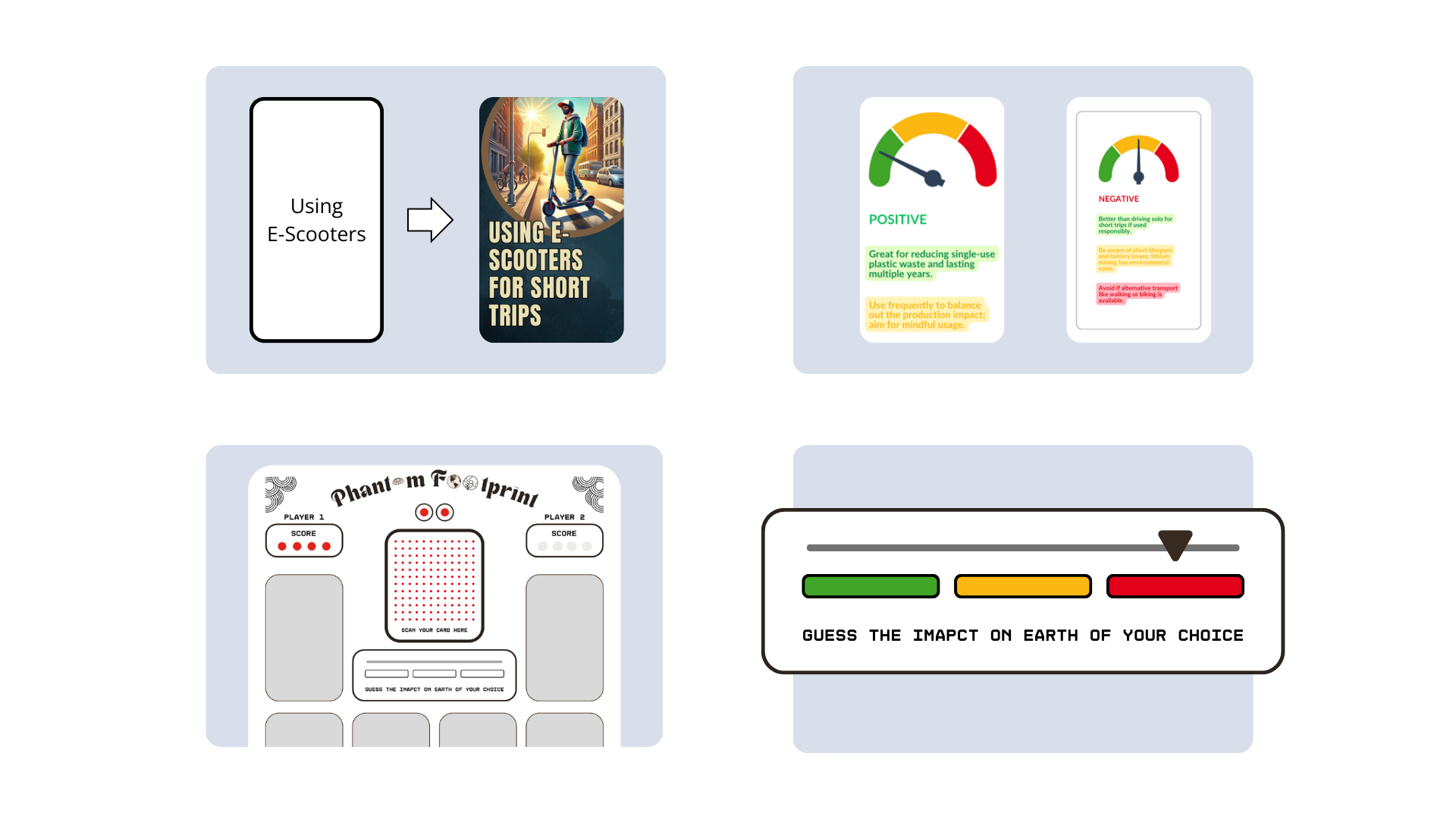
Testing Ambiguity. Improving Nuance.
Key finding from usability testing: players craved nuance over simple positive/negative feedback. Iteration added a medium impact category (yellow LED) to better reflect real-world complexity.
Code
Every great interaction begins with elegant code. The RFID-to-LED mapping was built using Arduino's MFRC522 library, reading card data, writing feedback states, and triggering visual responses in under 50 lines of C++.
Simple, modular, and intentional. The code embodies the same design philosophy as the game itself: clarity over complexity.
chapter iii
The Resolution
Bridging the Gap. 90% Engagement.
“The LED system helped players connect their choices to tangible results.”
— User Testing Feedback
Immediate feedback led to deeper reflection. Players connected choices to consequences, creating meaningful behavioral awareness.
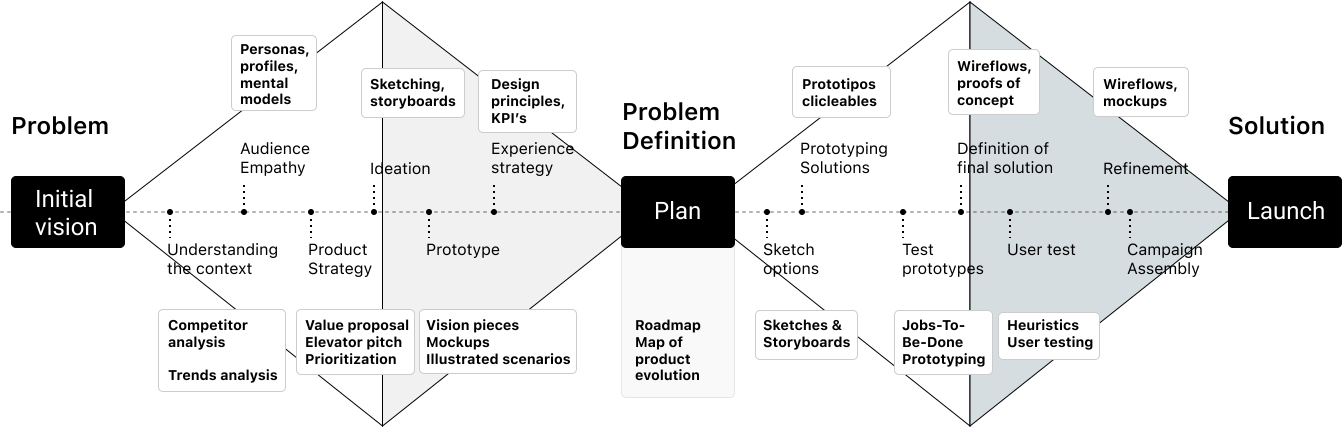
Double Diamond Framework
simplicity, iteration, and the power of physical ux.
Simplicity Matters
Clear feedback over complex systems
Iterative Design is Key
Testing revealed nuance requirements
Immediate Feedback is Crucial
Closing the action-consequence loop
Scope: From Campus Game to Global Platform.
Future vision includes expanding to younger audiences, gamifying the concept further into a digital companion app, and creating scalable educational tools for climate awareness.